
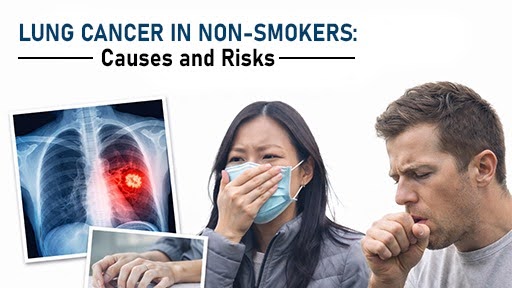
Lung cancer is commonly perceived as a disease caused almost exclusively by smoking. While tobacco use remains the leading risk factor worldwide, a significant and steadily rising number of lung cancer cases occur in individuals who have never smoked. Lung cancer in non-smokers is now recognized as a distinct clinical and biological entity, often driven by environmental exposure, genetic susceptibility, and molecular alterations rather than direct tobacco damage.
In many regions, especially urban and industrial areas, lung cancer among non-smokers has become an important public health concern. These patients often present at a later stage because neither they nor their physicians initially suspect cancer. Increasing awareness about causes, risks, symptoms, and modern treatment strategies is essential for early diagnosis and improved outcomes.
Lung cancer in non-smokers differs in several important ways from smoking-related lung cancer. In individuals who have never used tobacco, tumors are more commonly driven by specific genetic and molecular alterations rather than direct damage from cigarette smoke. These cancers may show different patterns of growth, spread, and response to treatment, which often allows for more personalized therapeutic approaches. Studies have also shown that lung cancer in non-smokers is more frequently diagnosed in women and in relatively younger age groups compared to smoking-related cases.
Unlike smoking-associated lung cancer, which typically results from prolonged exposure to tobacco carcinogens, lung cancer in non-smokers develops due to chronic, low-level injury to lung tissue over time. This injury may arise from inhaled environmental toxins, exposure to radiation such as radon gas, or internal molecular changes that interfere with normal cell repair and growth control mechanisms. Over years, these factors can lead to abnormal cell behavior and, eventually, cancer development.
Lung cancer in non-smokers usually develops through a combination of environmental and biological factors rather than a single cause.
Air pollution is one of the most significant contributors to lung cancer risk in non-smokers. Long-term exposure to fine particulate matter (PM2.5), vehicle exhaust, industrial emissions, and construction dust causes continuous irritation of the lung lining. Over time, this inflammation can lead to DNA damage and abnormal cell growth.
Urban populations and individuals living near highways or industrial zones face higher exposure levels, making air quality a critical risk factor.
Passive smoking remains a major cause of lung cancer in individuals who have never smoked themselves. Inhalation of tobacco smoke in enclosed spaces at home or work exposes non-smokers to carcinogenic chemicals similar to those inhaled by active smokers.
Prolonged exposure over many years significantly increases the risk of developing lung cancer, particularly among women and children.
Radon is a naturally occurring radioactive gas released from soil and rocks. It can accumulate inside homes and buildings, especially those with poor ventilation. Radon exposure damages lung cells through radiation, increasing cancer risk even in individuals without any smoking history.
Certain occupations involve exposure to substances known to increase lung cancer risk, including:
Workers in construction, mining, manufacturing, and transport industries are particularly vulnerable if protective measures are inadequate.
Non-smokers with lung cancer are more likely to have specific genetic mutations that drive tumor growth. These mutations are not inherited in most cases but develop spontaneously within lung cells.
These molecular changes play a critical role in determining treatment response and prognosis, making genetic testing an essential part of modern lung cancer care.
Symptoms of lung cancer in non-smokers are often subtle and nonspecific, which can lead to delayed diagnosis.
These warning signs may develop gradually and are often mistaken for routine respiratory issues:
Because these symptoms can mimic common respiratory conditions, persistent or worsening signs should always be evaluated by a healthcare professional.
Early and accurate diagnosis is essential for determining the most effective treatment approach.
A combination of imaging and laboratory tests is used to confirm the diagnosis and assess disease extent:
Staging determines whether the cancer is localized, regionally advanced, or metastatic and directly influences treatment decisions.
Treatment for lung cancer in non-smokers is highly individualized. Decisions are based on disease stage, tumor biology, lung function, overall health, and patient preferences. A multidisciplinary approach ensures thorough evaluation and coordinated care.
Surgery is often the preferred option for early-stage lung cancer when the disease is confined to the lung.
Several factors are evaluated to optimize surgical outcomes and patient recovery:
Surgery may also be combined with other treatments to improve long-term outcomes.
Radiation therapy plays a vital role in lung cancer treatment, particularly when surgery is not feasible or when combined with systemic therapies.
Radiation may be used in different clinical situations depending on disease stage and patient suitability:
Radiation therapy is frequently combined with chemotherapy or immunotherapy in advanced stages for better disease control.
Chemotherapy remains an important component of lung cancer treatment across various stages and continues to play a key role in both curative and palliative settings.
Chemotherapy may be applied in different treatment phases depending on disease stage and therapeutic goals:
Modern chemotherapy protocols emphasize supportive care to manage side effects and maintain quality of life.
Immunotherapy has transformed lung cancer management by harnessing the body’s immune system to fight cancer cells more effectively.
Immunotherapy offers several advantages that contribute to improved treatment outcomes:
Patient selection is guided by specific tumor markers and immune profiling.
Targeted therapy is particularly effective in non-smokers because their tumors often contain identifiable genetic mutations.
Targeted therapies offer specific benefits that enhance treatment effectiveness and patient experience:
These therapies have significantly improved outcomes in selected patient groups.
Supportive care focuses on symptom relief, emotional well-being, and overall quality of life throughout treatment.
These services are designed to help patients manage treatment-related challenges and maintain comfort:
Palliative care can be integrated at any stage of the disease.
Effective lung cancer treatment requires collaboration among medical oncologists, surgeons, radiation oncologists, radiologists, pathologists, and rehabilitation specialists.
Under the care of Dr. Pooja Gupta, recognized as one of the best cancer specialist in gurugram, patients benefit from evidence-based, individualized oncology management. With access to advanced diagnostics, modern therapies, and coordinated care, patients are supported in making informed decisions and achieving better treatment outcomes.
Long-term follow-up is essential to monitor for recurrence, manage late effects of treatment, and support overall health.
Comprehensive follow-up care focuses on recovery, long-term wellness, and quality of life:
This article is intended solely for educational and informational purposes and does not replace professional medical advice, diagnosis, or treatment. Lung cancer diagnosis and management require individualized evaluation by qualified healthcare professionals based on clinical examination, imaging studies, and laboratory findings.
Readers should not rely on this information for medical decision-making or delay seeking professional care. Always consult a licensed oncologist or healthcare provider for personalized advice. The author and publisher disclaim any liability arising from the use of this content.
