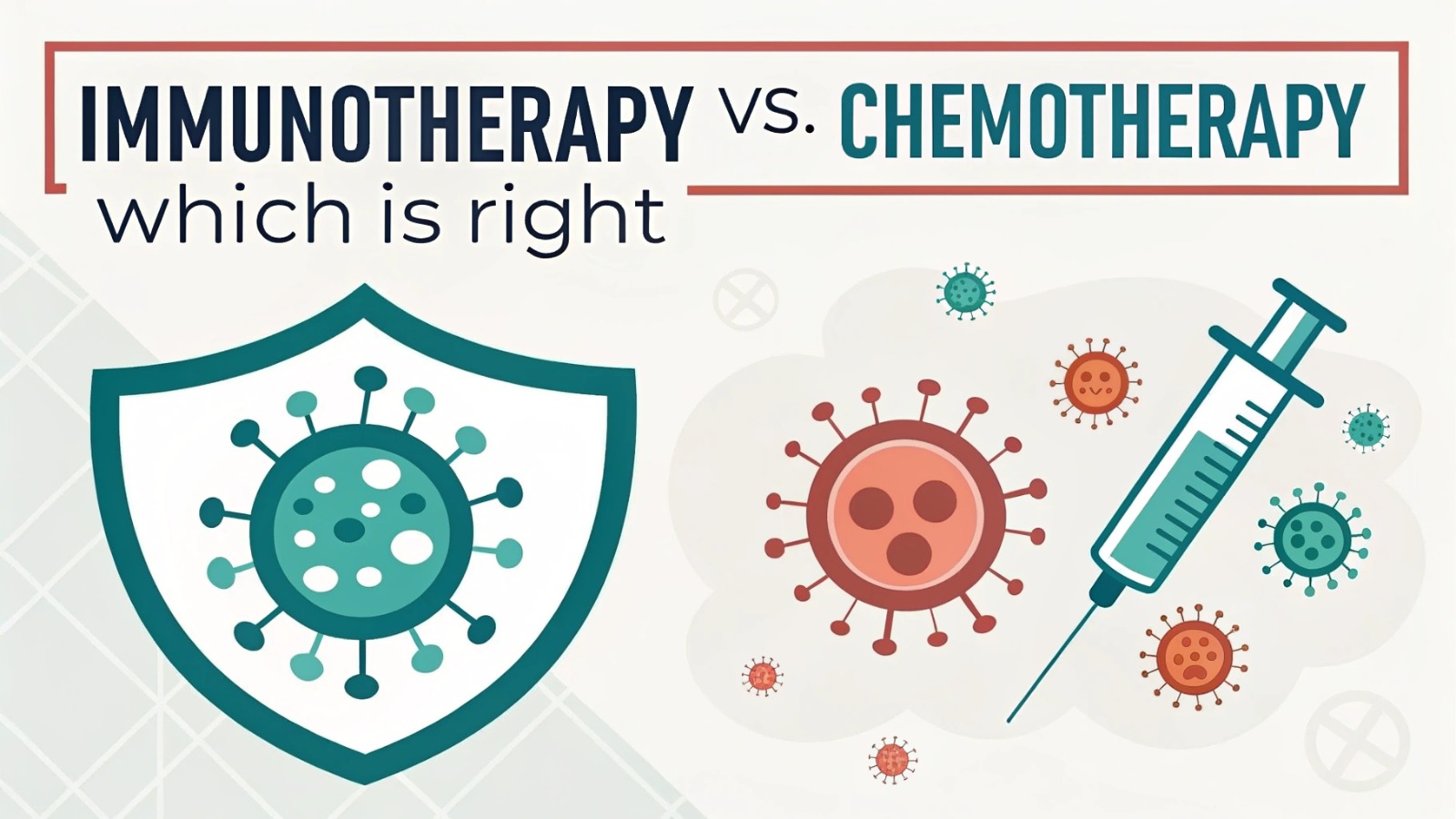
Patients seeking cancer
treatment in Gurgaon often face the choice between
Immunotherapy Treatment in Gurugram and traditional
chemotherapy.
Understanding the differences helps make informed decisions about treatment options.
Immunotherapy: A cancer treatment that boosts the body's immune system to
recognize and destroy cancer cells. It includes checkpoint inhibitors, CAR-T cell
therapy, monoclonal antibodies, and cancer vaccines.
Chemotherapy: A traditional cancer treatment that uses drugs to kill rapidly
dividing cancer cells. It can affect both cancerous and healthy cells, leading to
more side effects.
Key Treatment Differences
How They Work
Unlike approaches in Lung Cancer Treatment in Gurugram,
these treatments differ fundamentally:
- Immunotherapy activates your immune system to fight cancer cells naturally.
- Chemotherapy directly attacks and kills rapidly dividing cells throughout the
body.
- Treatment timing varies significantly between these two approaches.
- Response patterns differ in how quickly results become visible.
Treatment Administration
Similar to Breast Cancer Treatment in Gurugram, delivery methods
include:
- Immunotherapy often requires less frequent treatment sessions than chemotherapy.
- Chemotherapy typically follows strict scheduling for maximum effectiveness.
- Treatment duration varies based on individual response patterns.
- Administration methods differ in complexity and time requirements.
Comparing Side Effects
Immunotherapy Side Effects
As seen in Brain Tumor Treatment in Gurugram cases:
- Immune-related reactions typically affect specific organ systems selectively.
- Side effects often appear gradually and can be managed.
- Long-term complications tend to be less severe overall.
- Recovery periods between treatments are generally shorter.
Chemotherapy Side Effects
Like in Head and Neck Cancer Treatment in
Gurugram:
- Hair loss and fatigue commonly occur during treatment periods.
- Nausea and appetite changes require active management strategies.
- Blood count changes need regular monitoring and intervention.
- Side effects typically begin shortly after each treatment.
Immunotherapy vs. Chemotherapy
| Factor |
Immunotherapy |
Chemotherapy |
| Mechanism of Action |
Enhances the body's immune response to fight cancer |
Directly kills rapidly dividing cancer cells |
| Target Specificity |
More targeted, affects mainly cancer cells |
Affects both cancerous and healthy cells |
| Effectiveness |
Can provide long-term immunity against cancer |
Immediate response, but cancer may return |
| Common Side Effects |
Fatigue, flu-like symptoms, skin rash, inflammation |
Hair loss, nausea, vomiting, immune suppression |
| Duration of Treatment |
Can be long-term (months to years) |
Usually given in cycles (weeks to months) |
| Best for Cancer Types |
Melanoma, lung cancer, bladder cancer, lymphoma, breast cancer |
Almost all types, including leukemia, breast, lung, and colon cancer |
| Response Time |
Slower, but long-lasting effects |
Faster but may not provide long-term immunity |
| Cost |
More expensive due to specialized treatments |
Comparatively lower but requires multiple cycles |
| Long-Term Benefits |
Can create lasting immunity against cancer |
Higher risk of recurrence after treatment stops |
| Use with Other Treatments |
Often combined with chemotherapy or targeted therapy |
Often used alongside radiation or surgery |
Treatment Effectiveness
Immunotherapy Success Factors
Similar to Colorectal Cancer Treatment in Gurugram
outcomes:
- Long-lasting responses continue after treatment completion in responders.
- Specific cancer types show better response to immunotherapy.
- Genetic markers help predict treatment success rates.
- Ongoing immune response provides continued protection naturally.
Chemotherapy Success Factors
As with Gynecologic Malignancies Treatment
in Gurugram:
- Rapid tumor shrinkage often occurs in responding patients.
- Treatment effectiveness can be measured quickly through testing.
- Multiple cancer types respond well to chemotherapy protocols.
- Combined approaches often enhance overall treatment success.
Making Your Decision
Personal Factors to Consider
Working with Palliative Care Treatment in Gurugram teams:
- Overall health status influences which treatment suits you best.
- Cancer type and stage guide appropriate treatment selection.
- Previous treatment responses help determine next steps carefully.
- Lifestyle factors affect treatment schedule feasibility significantly.
Medical Considerations
Like in Genitourinary Malignancies
Treatment in Gurugram:
- Genetic testing results guide treatment choice recommendations effectively.
- Current health conditions impact treatment tolerance significantly.
- Treatment goals help determine appropriate therapy options.
- Insurance coverage affects treatment accessibility and choices.
Treatment Combinations
Dual Therapy Approaches
Healthcare teams may recommend:
- Combined treatments often enhance overall effectiveness for patients.
- Scheduled combinations follow carefully planned timing sequences.
- Side effect management becomes more comprehensive with combinations.
- Regular monitoring ensures optimal treatment response patterns.
Sequential Treatment
Doctors might suggest:
- Starting with one treatment then switching based on response.
- Alternating treatments to maximize cancer-fighting effectiveness.
- Adding complementary therapies to enhance overall results.
- Adjusting approaches based on ongoing treatment responses.
Cost Considerations
Financial Aspects
Important factors include:
- Insurance coverage varies between treatment types significantly.
- Payment plans help manage treatment costs effectively.
- Support programs assist with financial planning and management.
- Long-term cost implications differ between treatment approaches.
Treatment Support
Available Resources
Gurgaon facilities provide:
- Support groups help patients connect with others sharing experiences.
- Educational programs explain treatment details and expectations clearly.
- Counseling services assist with treatment-related decision making.
- Financial advisors help navigate insurance and payment options.
Comprehensive supportive care and effective side effect management are essential
components of successful immunotherapy treatment in
Gurgaon. Through integrated care
approaches and dedicated support systems, patients receive the assistance needed to
manage side effects and maintain quality of life during treatment.