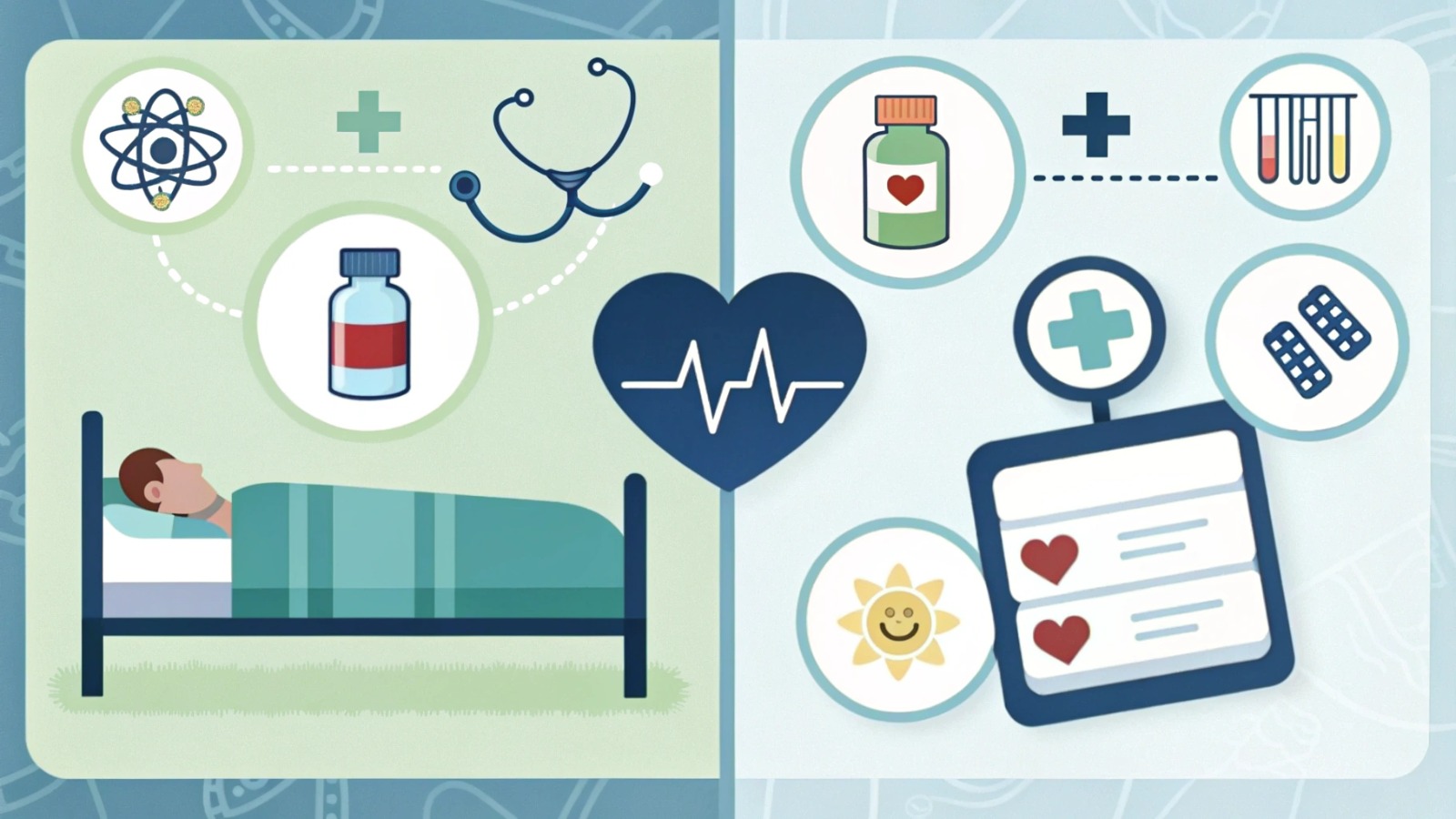
When facing serious illness, patients and families often navigate difficult decisions
between pursuing curative treatments and incorporating palliative care.
Understanding the fundamental differences, potential integration points, and
decision-making frameworks can significantly impact quality of life and treatment
outcomes. This comprehensive guide explores how to approach this critical choice
with clarity and confidence.
Understanding the Core Approaches
Defining Curative Treatment
- Surgical interventions aimed at
completely removing cancerous tumors while preserving surrounding healthy tissue
whenever anatomically possible.
- Chemotherapy regimens designed to
eliminate cancer cells throughout the body, including those not detected by
imaging.
- Radiation therapy targeting specific
disease sites with the goal of destroying malignant cells while sparing healthy
tissues.
- Immunotherapy treatments harnessing
the body's immune system to identify and attack disease cells throughout the
circulation.
- Stem cell transplantation replacing
diseased bone marrow with healthy cells to restore normal blood cell production.
Defining Palliative Care
- Pain management protocols utilizing
multiple modalities to effectively control chronic or breakthrough pain
impacting daily functioning.
- Symptom-focused interventions
addressing nausea, fatigue, breathing difficulties, and other distressing
physical manifestations of illness.
- Psychological support services helping
patients process emotions related to diagnosis, treatment decisions, and disease
progression.
- Family support resources assisting
caregivers with practical needs and emotional challenges throughout the illness
trajectory.
- Advance care planning facilitating
meaningful conversations about future care preferences based on individual
values and priorities.
Common Misconceptions
- Palliative care differs from hospice
care, as it remains appropriate at any stage of illness alongside curative
treatments.
- Choosing palliative support does not
signify "giving up" but rather enhances comprehensive care addressing total
patient experience.
- Curative treatments may still be
appropriate even when complete cure remains unlikely but disease control remains
possible.
- Palliative interventions frequently
improve tolerance of curative treatments by effectively managing side effects
and complications.
- The decision timeline remains fluid,
allowing movement between predominantly curative and predominantly palliative
approaches as needed.
Factors Influencing Treatment Decisions
Medical Considerations
- Disease characteristics including
stage, grade, and specific biological markers that influence treatment response
probabilities.
- Statistical survival outcomes based on
research comparing various treatment approaches for specific disease
presentations and patient populations.
- Treatment response history documenting
how the disease has previously responded to specific interventions guiding
subsequent decisions.
- Functional status assessments
measuring the patient's physical capabilities and how these might impact
treatment tolerance.
- Comorbidity evaluations considering
how other health conditions may interact with proposed treatments or alter
risk-benefit calculations.
Quality of Life Factors
- Symptom burden assessment evaluating
how current symptoms impact daily functioning, relationships, and meaningful
activities.
- Treatment side effect profiles
comparing anticipated quality of life impacts across different available
treatment options.
- Independence measures considering how
various treatment approaches might affect ability to maintain preferred living
arrangements.
- Ability to participate in meaningful
activities and maintain important relationships during and after proposed
treatments.
- Personal goals reflection identifying
what activities, milestones, or experiences hold particular importance for the
individual patient.
Value-Based Decision Making
- Risk tolerance assessment exploring
comfort levels with treatment intensity versus certainty of outcomes across
available options.
- Treatment burden evaluation
considering time commitments, financial impacts, and logistics involved with
different care approaches.
- Spiritual and existential priorities
reflecting individual beliefs about meaning, purpose, and appropriate approaches
to serious illness.
- Legacy considerations identifying how
remaining time might best align with personal values and desired impact on
others.
- Family impact assessment acknowledging
how treatment choices affect loved ones providing care and sharing the illness
journey.
Integrated Approaches: Beyond Either/Or
Concurrent Care Models
Combining approaches effectively:
- Early palliative integration alongside
curative treatments improving quality of life without compromising survival in
multiple studies.
- Symptom management protocols running
parallel to disease-modifying treatments enhancing treatment tolerance and
reducing complications.
- Interdisciplinary team meetings
including both curative and palliative specialists ensuring comprehensive
treatment planning and coordination.
- Staged approach planning identifying
triggers for adjusting the balance between curative and palliative elements as
conditions evolve.
- Treatment breaks incorporating
intensive symptom management allowing physical recovery before resuming curative
interventions when appropriate.
Transitional Approaches
Navigating changing circumstances:
- Step-down protocols gradually reducing
intensity of curative interventions while increasing focus on comfort and
quality measures.
- Trial periods establishing clear
timeframes and evaluation metrics for assessing response to specific curative
approaches before reconsideration.
- Partial treatment approaches focusing
curative efforts on dominant symptoms while managing others through palliative
interventions.
- Intermittent therapy scheduling
built-in recovery periods between treatment cycles with intensified supportive
care during breaks.
- Conditional planning establishing
specific clinical indicators that would trigger shifts in the balance of
curative versus palliative emphasis.
Communication Strategies
Facilitating ongoing dialogue:
- Regular reassessment conversations
scheduling dedicated discussions about treatment efficacy, side effects, and
changing goals of care.
- Structured decision aids utilizing
visual tools helping patients understand statistical outcomes and quality of
life implications.
- Question prompt lists providing
patients with evidence-based questions to ask during critical treatment decision
appointments.
- Values clarification exercises helping
patients identify and prioritize what matters most regarding treatment
approaches and life quality.
- Family conferences including key
stakeholders in discussions about treatment directions and supportive care
needs.
Decision-Making Frameworks
Shared Decision-Making Model
Collaborative approach principles:
- Information exchange ensuring patients
receive complete explanations of treatment options with associated benefits,
risks, and alternatives.
- Values elicitation helping healthcare
teams understand what specific outcomes and experiences matter most to
individual patients.
- Deliberation process allowing
sufficient time for processing information and consulting trusted sources before
making decisions.
- Decision implementation plan outlining
concrete next steps once a direction has been chosen for treatment approach.
- Ongoing reevaluation establishing
regular points to revisit decisions as the clinical situation or personal
preferences evolve.
Practical Assessment Tools
Evidence-based decision supports:
- Symptom burden scales quantifying
physical and emotional symptom intensity to guide appropriate intervention
priorities.
- Functional assessment measures
documenting ability to perform daily activities and self-care tasks
independently or with assistance.
- Prognostic awareness evaluations
ensuring decisions are based on realistic understanding of disease trajectory
and treatment possibilities.
- Quality of life instruments measuring
multiple dimensions of wellbeing beyond purely physical symptoms or disease
measurements.
- Decision regret assessments helping
clinicians identify and address concerns about previous treatment choices
compassionately.
Navigating Healthcare Systems
Practical system considerations:
- Insurance coverage verification
determining financial implications of various treatment options before
finalizing decisions.
- Specialist access assessment
identifying available experts in both curative and palliative approaches within
geographic reach.
- Clinical trial eligibility exploration
identifying experimental treatment options that may offer additional approaches
beyond standard care.
- Second opinion logistics arranging
consultations with additional specialists before making significant treatment
direction changes.
- Care coordination resources ensuring
communication between multiple providers involved in delivering integrated care
approaches.
Special Considerations
Age-Related Factors
Life stage considerations:
- Physiological reserve
assessment: Evaluating how aging affects treatment tolerance and
recovery capabilities between interventions.
- Life expectancy
contextualization: Comparing disease prognosis with actuarial life
expectancy for age-matched individuals without the condition.
- Medication interaction
concerns: Accounting for how existing prescriptions might interact
with proposed treatment medications.
- Cognitive capacity
evaluation: Ensuring decision-making abilities remain intact or
identifying appropriate surrogate decision makers.
- Social support
assessment: Identifying available caregiving resources and
potential needed supplemental assistance during treatment.
Disease-Specific Decision Points
Condition-related considerations:
- Cancer treatment
decisions: Weighing tumor characteristics, biomarkers, and specific
response rates to available therapies.
- Cardiac condition
approaches: Balancing intervention risks against potential
functional improvements and symptom relief benefits.
- Neurological disease
management: Considering cognitive impacts alongside physical
symptoms when evaluating treatment approaches.
- Respiratory illness
interventions: Weighing mechanical support options against less
invasive symptom management approaches as conditions progress.
- Renal disease
decisions: Considering quality of life implications of various
renal replacement therapies versus conservative management.
Family Dynamics
Relational considerations:
- Caregiver capacity
assessment: Evaluating physical, emotional, and logistical ability
to support various treatment approaches at home.
- Family consensus
building: Facilitating productive conversations when disagreements
arise about appropriate treatment directions.
- Financial impact
analysis: Considering how treatment costs might affect family
resources and long-term financial security.
- Geographic
challenges: Addressing when patients and key family members live
distant from treatment centers or from each other.
- Cultural and religious
factors: Incorporating important traditions and beliefs that
influence medical decision-making processes.
Implementing Your Decision
Creating a Comprehensive Care Plan
Operationalizing chosen approach:
- Treatment scheduling:
Establishing realistic timelines for interventions while building in flexibility
for unexpected developments.
- Symptom management
protocols: Documenting specific approaches for addressing
anticipated side effects or disease symptoms.
- Communication plan:
Identifying key contacts for various concerns that might arise during treatment
implementation.
- Contingency planning:
Establishing conditions under which the current approach should be reevaluated
or modified.
- Resource
mobilization: Ensuring necessary medical equipment, medications,
and support services are arranged before needed.
Monitoring and Reassessment
Ongoing evaluation processes:
- Treatment response
metrics: Establishing objective measures to evaluate how well
current approaches address underlying disease.
- Symptom tracking
systems: Documenting changes in comfort, function, and quality of
life throughout treatment course.
- Tolerance assessment:
Scheduling regular check-ins about how well the chosen approach aligns with
evolving preferences.
- Decision satisfaction
evaluation: Measuring how well the current care plan aligns with
patient values and expectations.
- Trigger point
identification: Establishing specific clinical or quality of life
changes that would prompt reconsidering the approach.
Adjusting Course
Responding to changing circumstances:
- Treatment modification
protocols: Establishing how to adjust interventions when full doses
cannot be tolerated.
- Palliative scaling
procedures: Intensifying symptom management when burden increases
despite current measures.
- Transition planning:
Guidance for shifting focus when curative approaches no longer offer reasonable
benefit-to-burden ratio.
- Referral pathways:
Connecting to additional supportive services as needs evolve throughout the
illness trajectory.
- Legacy work
facilitation: Helping address emotional, spiritual, and
relationship priorities as circumstances change.
Integrated Care: A Balanced Approach
The dchotomy between curative treatment and palliative care represents an outdated
paradigm. Contemporary approaches recognize the value of thoughtful integration,
with the balance shifting across the illness trajectory based on clinical response,
symptom burden, and evolving personal priorities.
Making the "right choice" involves ongoing dialogue rather than a single decision
point. By understanding the complementary nature of curative and palliative
approaches, patients and families can advocate for comprehensive care that addresses
both disease management and quality of life throughout their illness journey.
The most effective decisions emerge from collaborative processes involving medical
expertise, clear communication about options, and deep respect for individual values
and preferences. With this integrated approach, patients can receive the most
appropriate care at each stage of illness.